
ASSOCIATE PROFESSOR OF GLOBAL CHANGE BIOLOGY — PI
Coming from one of the most biologically diverse countries in the world, Colombia,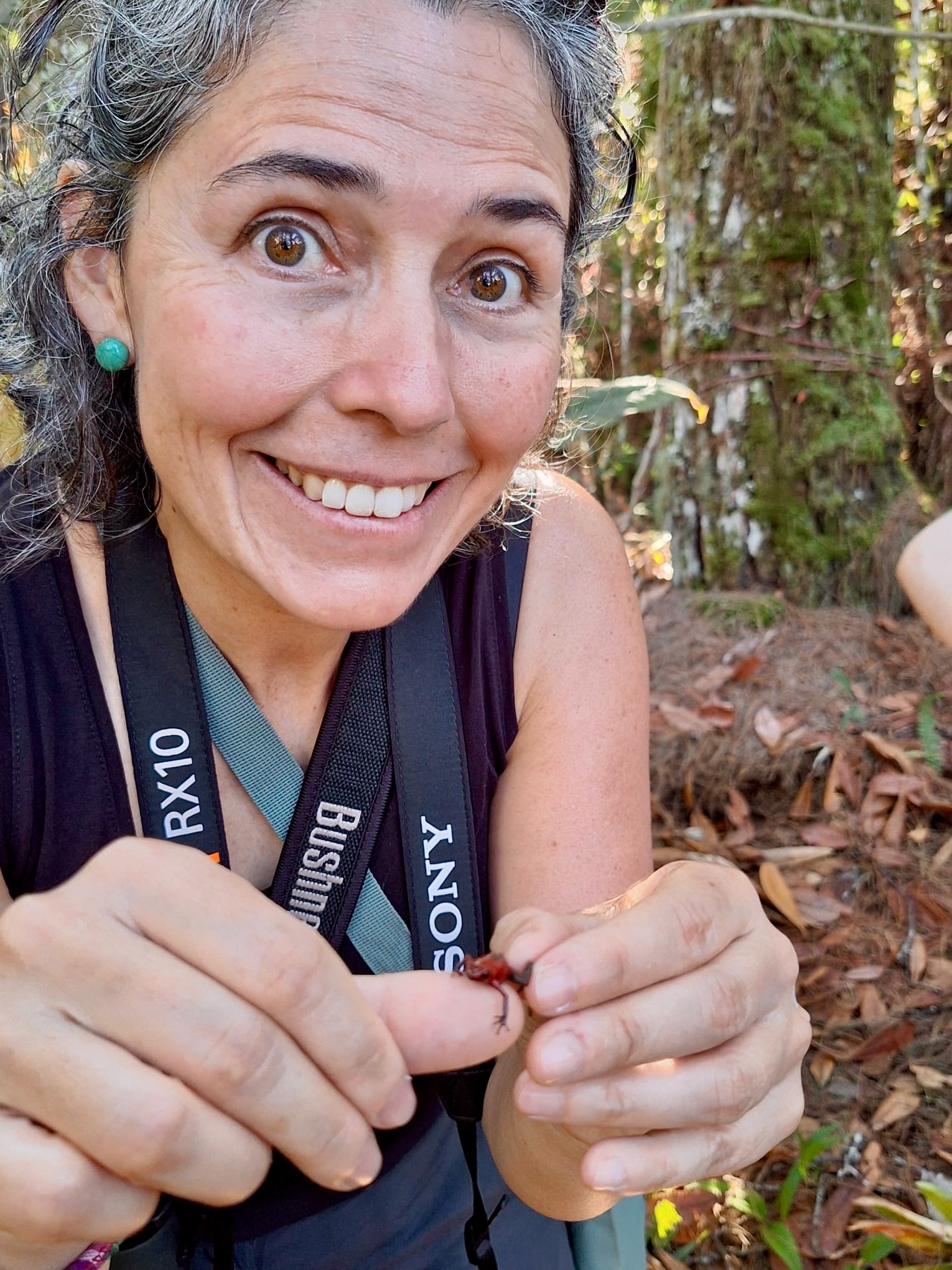 I have always felt fascinated by the different expressions of diversity found in nature. Therefore, unsurprisingly, my research aimed for a while at understanding how diversity in animal colouration, particularly in the context of anti-predator defences, can be maintained. I did my undergraduate and MSc studies at the University of Los Andes, Bogotá, Colombia and, after six wonderful years working as a science teacher at Los Nogales School in Bogotá, I got a scholarship to carry out my PhD.
I did my doctoral studies under the supervision of Prof. John Endler, starting at the Centre for Research in Animal Behaviour, University of Exeter (UK) and finishing at the Centre for Integrative Ecology, Deakin University (Australia). My PhD research focused on understanding the apparent paradox of colour pattern variation in an aposematic species (see full CV here). Straight after my PhD, I joined the Ecology & Evolution of Interactions Research Group, led by Prof. Johanna Mappes at the University of Jyväskylä, Finland. There, as a postdoctoral researcher, I investigated different aspects of the anti-predator defences of the aposematic wood tiger moth, Arctia plantaginis. In 2018 I got the highly competitive “Academy Research Fellowship” awarded by the Academy of Finland, which gave me the chance to start my own group and get back to studying poison frogs.
Nowadays, I’m an Associate Professor of Global Change Biology at the Konrad Lorenz Institute of Ethology, University of Veterinary Medicine Vienna, where I investigate how anthropogenic activities such as habitat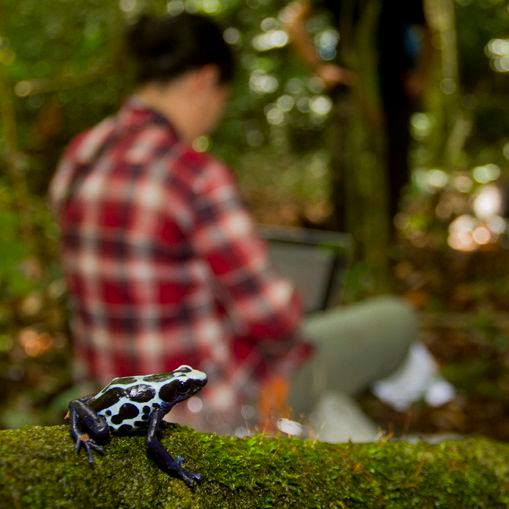 alteration and contamination on the life history, health and behaviour of amphibians, in particular poison frogs and fire salamanders, both in Europe and South America. In general, my interests lie in the interface between behavioural and evolutionary ecology. I am particularly interested in different aspects of communication, animal colouration, predator-prey interactions, aggression, parental care, and life history trade-offs (see full CV here and my Google Scholar Profile here).
I am an advocate for women and young Latin Americans in science, and I am invested in bringing up to the academic community the voice(s) of researchers which have not commonly had an active participation in it. #SeHablaEspañol
 ROJAS•LAB